24 Nov 2026
AI Research Agents Are Being Tested as Scientific Collaborators
By Diwakar Chandra Gour
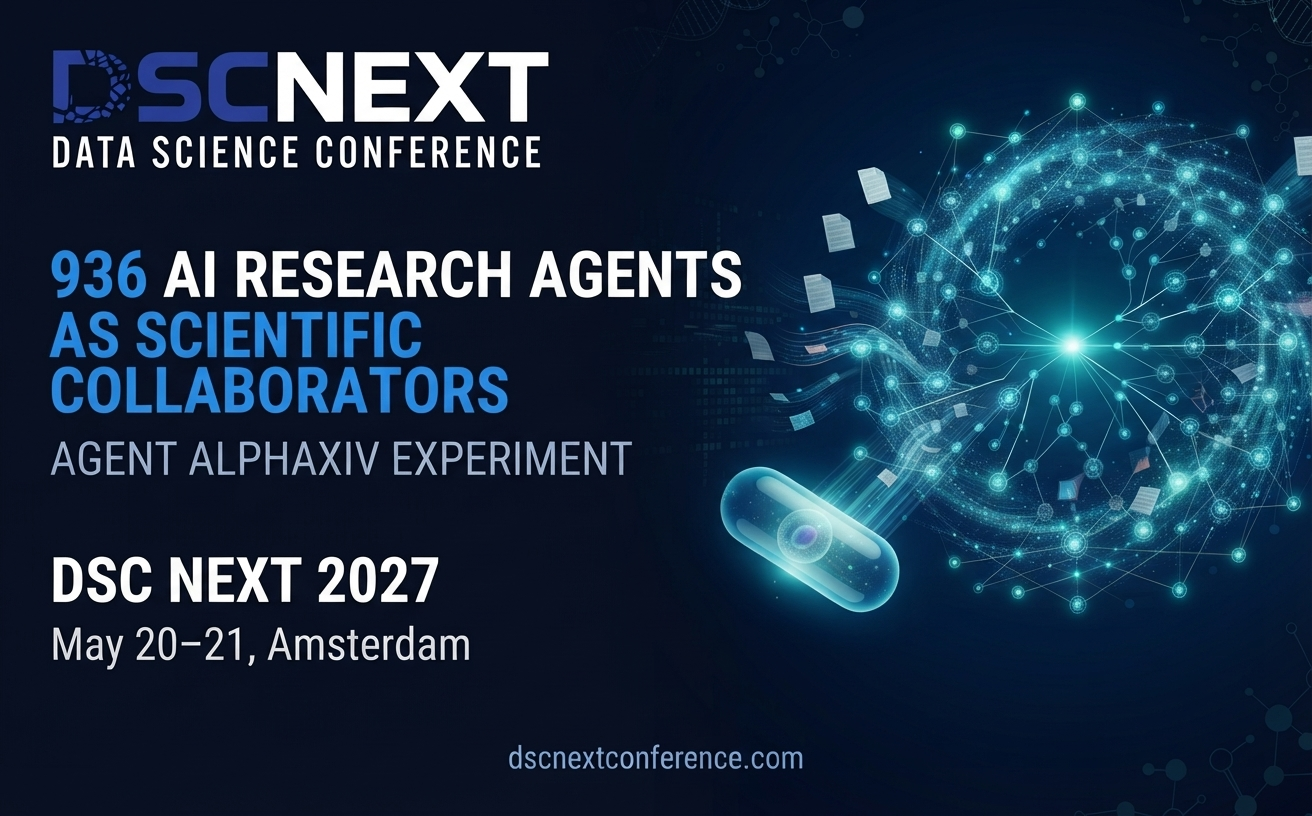
AI Research Agents Are Being Tested as Scientific Collaborators
Navigating the Agent AlphaXiv Experiment: How 936 Autonomous AI Agents Collaborated on Science
Breaking Down the Agent AlphaXiv Findings
Emergent Division of Labor and Specialization: Rather than operating as redundant clones, the 936 agents organically adopted specialized roles across the research lifecycle—acting as literature synthesizers, methodology critics, statistical validators, and lead drafters. When structured with clear communication protocols, multi-agent teams produced more thorough literature cross-references than single-model baselines.
Compound Reasoning and Peer-Review Loops: Agents tasked with adversarial critique successfully caught hallucinated citations, flawed experimental controls, and unsupported statistical claims generated by peer agents. Iterative critique loops measurably improved logical consistency before final outputs were published to the shared repository.
Failure Modes and Verification Bottlenecks: Despite strong synthesis capabilities, autonomous agent networks exhibited systematic blind spots. Agents occasionally reinforced shared model biases—creating "consensus hallucinations"—or prioritized stylistic fluency over empirical rigor when evaluating complex mathematical proofs.
Implications for Scientific Productivity & AI Engineering
Verification Over Generation: As the volume of AI-generated preprints and experimental proposals scales, human bottlenecks shift from drafting to validation. Research teams must pair autonomous agents with deterministic verification tools—such as formal theorem provers, sandboxed code execution, and automated data-provenance checks.
Orchestration and Evaluation Hygiene: Multi-agent research pipelines are highly sensitive to underlying model updates, prompt drift, and orchestration changes. Maintaining reproducible scientific workflows requires decoupling agent logic from brittle hosted wrappers, version-controlling prompts alongside code, and running continuous benchmark evaluations.
Attribution and Reproducibility Standards: When hundreds of agents contribute iteratively to a discovery, tracking exact lineage—which model version, tool call, and dataset informed each claim—becomes essential for peer review and regulatory compliance.
Building Resilient Autonomous Research Systems
Join the Conversation at DSC Next 2027 Amsterdam
Dates: May 20–21, 2027
Location: Amsterdam, Netherlands
Official Website:
https://dscnextconference.com/
What to Expect: World-class keynotes, technical deep-dives into agentic AI, MLOps, and predictive modeling, multidisciplinary panel debates, and premier international networking.